

Wolf Pits and the Blatná water ditch
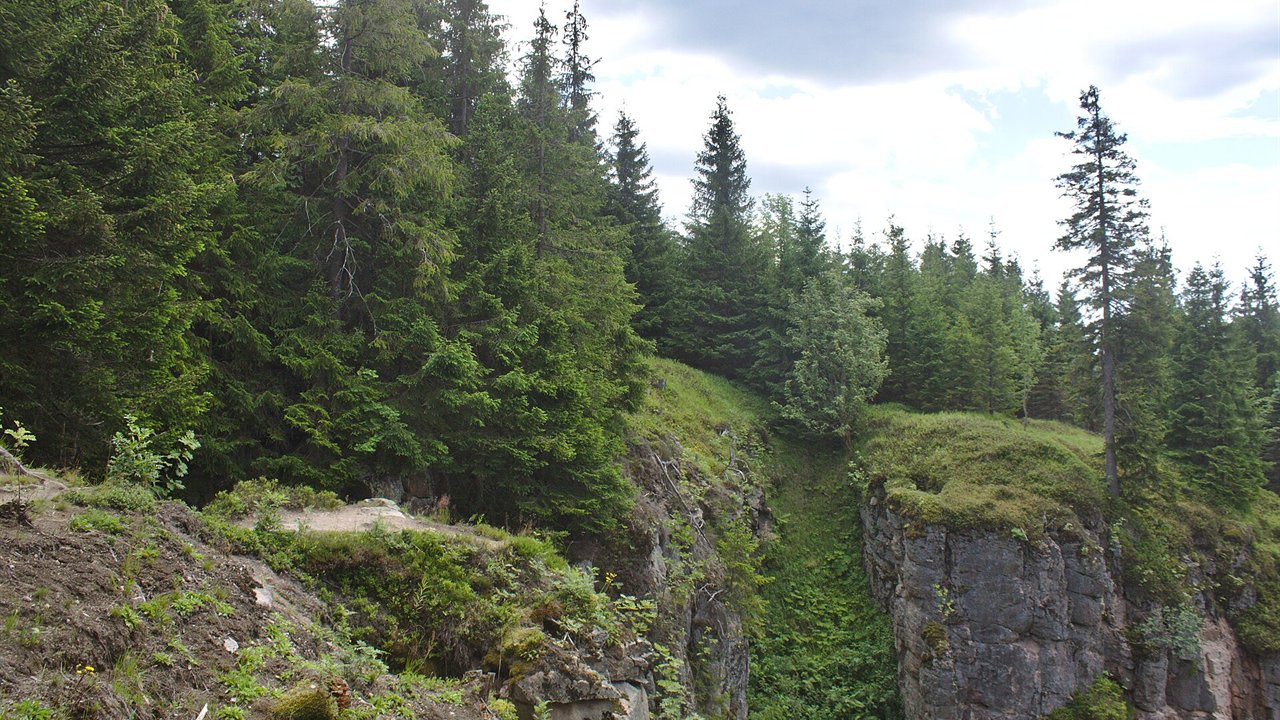
Above Horní Blatná the ground caved in after centuries of tin mining. What remains are deep, narrow pits where snow often lasts into summer. A loop of just under five kilometres leads past them from the town square, and close by runs a water ditch that miners dug almost five hundred years ago and that still carries water today.
The story of the place
Horní Blatná (German: Bergstadt Platten) was founded in 1532 by the Saxon Elector John Frederick. It is a planned Renaissance town and the only town in the Ore Mountains that was founded because of tin. Tin was mined here for about four hundred years, from the late 15th to the mid-19th century; as late as 1739 the miners struck a new rich vein.
The ore lay in steep veins, and the miners broke it out in chambers deep underground. The Wolfgang mine went down to about 85 metres. When the worked-out chambers collapsed, the surface above them caved in. That is how the Wolf Pit (Vlčí jáma) formed above the Wolfgang mine and the Ice Pit (Ledová jáma) above the Jiří (George) mine. The Wolf Pit is about 120 metres long and around 20 metres deep.
Snow and ice stay in the Ice Pit long into summer, usually until mid-July. It is said that after the Battle of Leipzig in 1813 ice from here was taken by cart to wounded soldiers. In the summer of 2005 someone illegally removed about two tonnes of ice. In recent years there has been less snow, and after warm winters it melts earlier. Day-trippers came here as early as the beginning of the 20th century, when steps led down into the pits. Today the pits are fenced off and have been a protected nature monument since 1975.
Water for the ore-processing works and smelters came along the Blatná water ditch (Blatenský vodní příkop), which miners dug in 1540–1544. It starts about one and a half kilometres west of Boží Dar, takes water from the Černá stream and the Boží Dar peat bog, and runs via Ryžovna and Bludná to the slopes of Blatenský vrch. It is 12 to 13 kilometres long and its bed keeps almost the same height all the way. The water drove mining machinery, timber was floated on it, and later it was used for firefighting. The ditch was maintained until 1945, restored in 1995–2001 and still carries water. Since 2017 it has been a national cultural monument.
The area around Horní Blatná, Blatenský vrch and the ditch have been part of the UNESCO World Heritage site Erzgebirge/Krušnohoří Mining Region since 2019.
Key dates
- 1532Horní Blatná is founded
- 1540–1544the Blatná water ditch is dug
- around 1850mining in Horní Blatná ends
- 1975the Wolf Pits become a protected nature monument
- 2017the ditch becomes a national cultural monument
- 2019the Erzgebirge/Krušnohoří Mining Region joins the UNESCO World Heritage list
What you will see
- The Wolf Pit — a long, narrow chasm, visible from viewpoints along the trail.
- The Ice Pit, where snow and ice lie at the bottom in spring and often in summer.
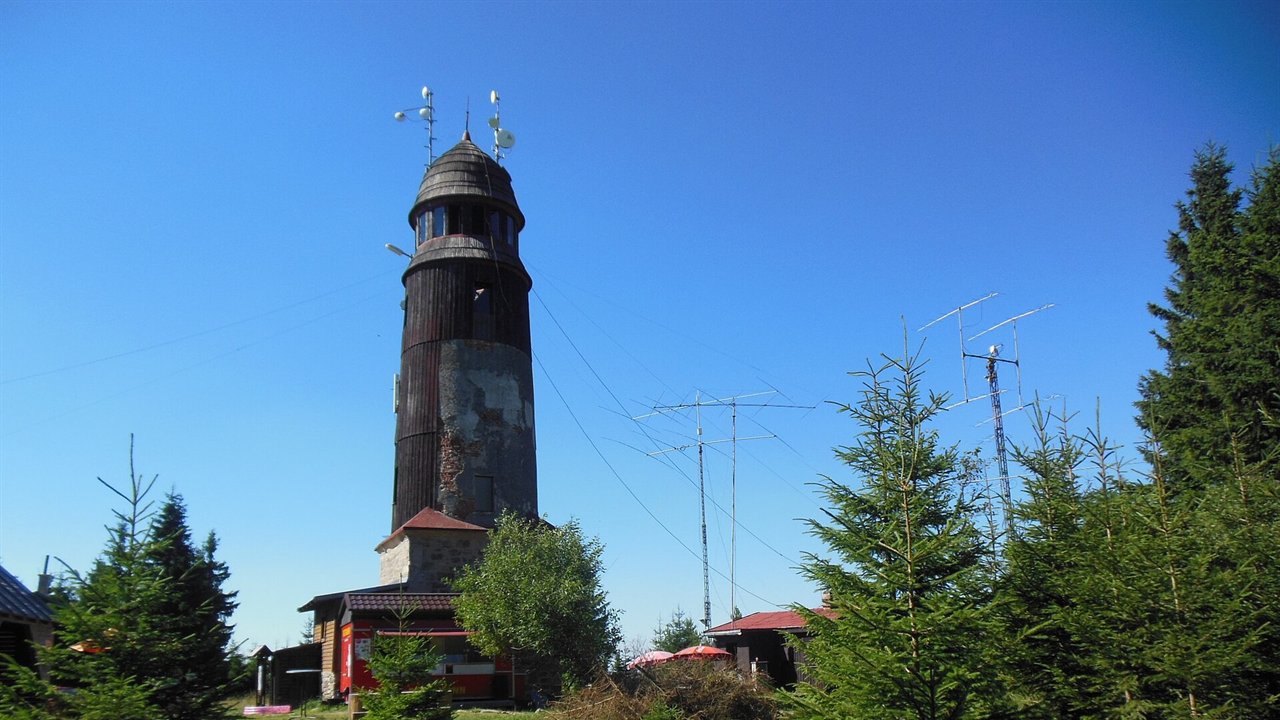
- The lookout tower on Blatenský vrch (1,043 m), 21 metres high and opened in 1913; 85 steps lead to the top.
- The Blatná water ditch with sluices, overflows and crossings with streams.
- A nature trail with seven boards in Czech and German on tin, the ditch, the forests and both pits.
Practical tips
- From Háj: about 45 minutes by car to Horní Blatná (28 km).
- The loop: the Horní Blatná – Wolf Pits nature trail is just under 5 km long and starts and ends on the town square. The climb to Blatenský vrch is fairly steep.
- Parking: on the large square by the church of St Lawrence. Horní Blatná also has a railway stop on the Karlovy Vary – Potůčky line.
- Don't climb into the pits. They are fenced off and entry is forbidden because of landslides and the risk of falling; stay on the trail and at the viewpoints.
- Along the ditch a nature trail runs from Boží Dar to Horní Blatná, about 12 km one way with 23 stops. It combines well with the Boží Dar peat bog.
- The trail is not passable with a pushchair or wheelchair. Wear sturdy shoes.
Make a day of it
Stay 20 km away
Cottage Háj is 20 km away as the crow flies. Holiday cottage for up to 12 guests to rent in Háj near Kraslice, Ore Mountains, 18 km from Karlovy Vary. Fireplace, billiards, bar, dogs welcome.