

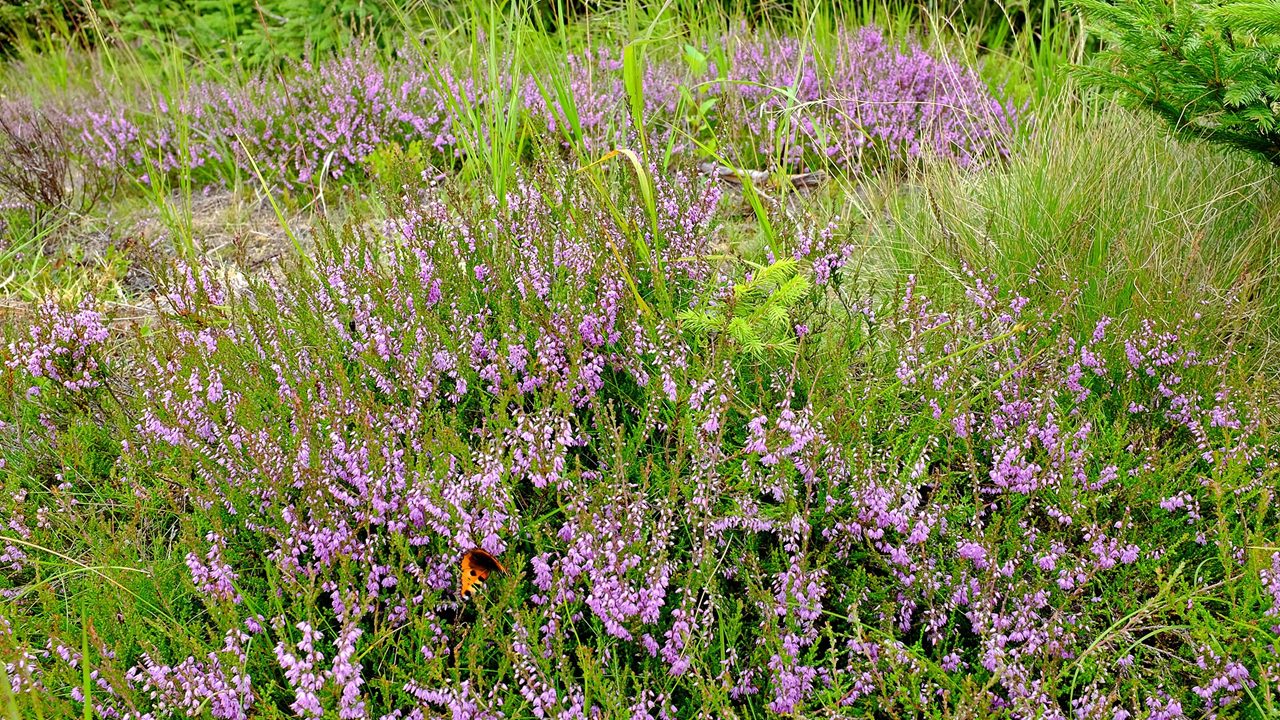
Přebuz heathland
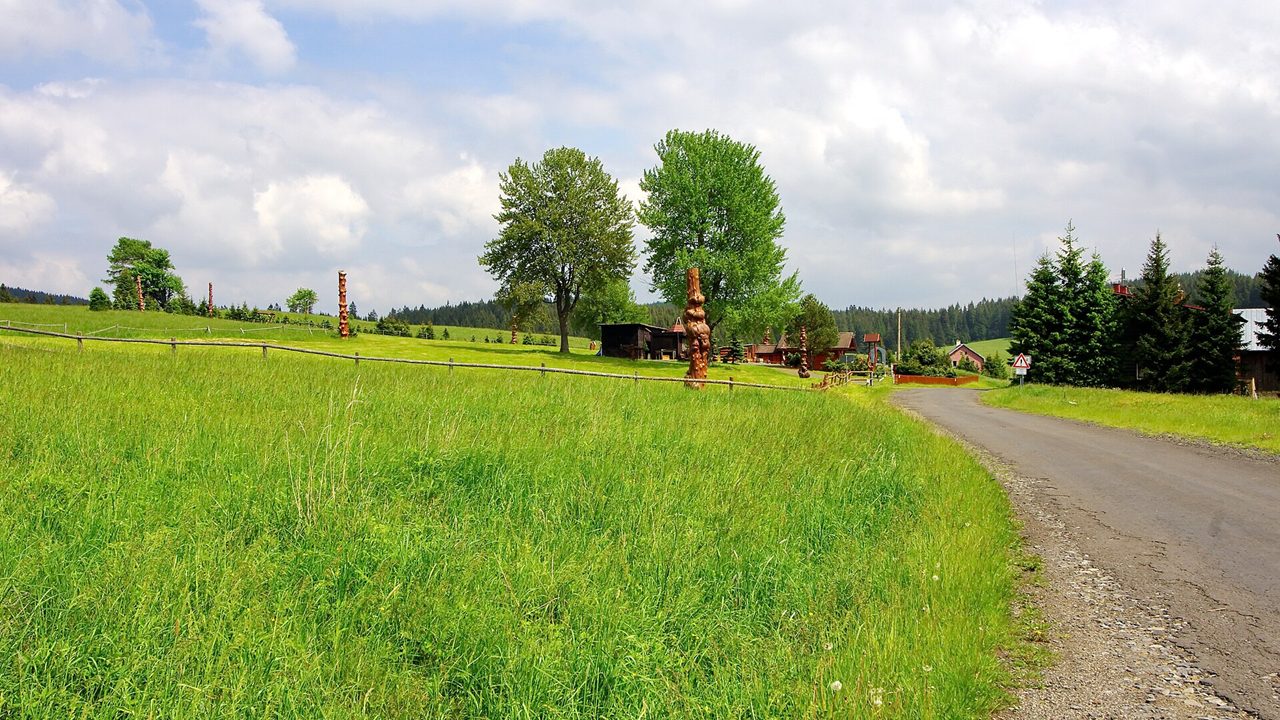
The high plateau around Přebuz lies at almost 900 metres. Where peat was once cut, heathland with small ponds has grown. Next to it is the smallest town in the Czech Republic, and in the forests around it are the remains of villages that disappeared after the Second World War.
The story of the place
According to the local chronicle, Přebuz (German: Frühbuß) was founded by German settlers in 1347. Written records start in the mid-16th century; in 1553 the Schlick family granted it mining rights. Silver was panned in the area as early as the 13th century, but tin was the main ore, mined most intensively between 1698 and 1760. Tradition has it that Emperor Joseph II heard mass here in 1766 and spent the night at the rectory. The present church of St Bartholomew dates from 1787.
Mining returned to Přebuz in 1933 and peaked during the German occupation. After 1945 the mines closed and most of the original, mainly German-speaking inhabitants were expelled. Before the war more than a thousand people lived in Přebuz; at the beginning of 2026 there were 67. That is why Přebuz is known as the smallest town in the Czech Republic.
The heathland lies on a raised bog from which most of the peat was dug out. Peat was still cut, dried and burned as fuel here in the first half of the 20th century, and illegal cutting went on in the 1980s. The cut-over ground turned into a mosaic of heather, wetland and ponds, along with water-filled hollows where deep tin mines collapsed. Since 1992 it has been a protected nature monument of more than 90 hectares, part of the European network of protected sites (Natura 2000) and of the Western Ore Mountains bird area.
Just to the north lies Rolava, in German Sauersack. It is first mentioned in 1654. Around 1900 more than a thousand people lived there in about 150 houses. From 1940 a deep tin mine was built there, together with a prisoner-of-war camp, first for French and later mainly for Soviet prisoners. After the war the village emptied; by 1950 it had 16 inhabitants, and in 1951 it ended up in the border zone. Only a few houses and the concrete remains of the mine are left.
The village of Chaloupky, in German Neuhaus, stood in the Rolava valley. It is first recorded in 1757. In 1900 it had 565 inhabitants; by the mid-1950s nobody lived there. In the 1980s there were plans to flood the valley with a reservoir.
Key dates
- 1553Přebuz receives mining rights
- 1787the church of St Bartholomew in Přebuz is completed
- 1942mining starts in the deep tin mine at Rolava
- 1945–1950the inhabitants are expelled; Rolava and Chaloupky empty
- 1992the heathland becomes a protected nature monument
What you will see
- The heathland with its ponds, about one and a half kilometres north-west of Přebuz. Heather flowers from July to September. Ice-age survivors such as bog bilberry and dwarf birch grow around Přebuz.
- Přebuz: the church of St Bartholomew and house No. 46, a former coaching inn from the mid-18th century and one of the oldest buildings in the western Ore Mountains. In the woods below Čertova hora there are hollows left by tin mining.
- Rolava: a few remaining houses and the remains of the tin mine — a concrete processing plant, a chimney and ore bins.
- Chaloupky: house foundations and a mill race in the Rolava valley.
Practical tips
- From Háj: about 25 minutes by car to Přebuz (15 km), about 30 minutes to Rolava (17 km). By bike on cycle route 2044, which runs from Háj through Přebuz to Rolava.
- To the heathland: it lies by the road from Přebuz to Stříbrná; you can drive to within about 250 metres.
- To Chaloupky: from the Chaloupky car park (Chaloupecké parkoviště), where the road turns onto a forest track along the Rolava. Cycle route 2000 Pernink – Nové Hamry – Rolava also runs along the valley.
- Stay on the marked paths. There are old galleries and shafts underground, and near the Rolava mine open shafts are hidden in the undergrowth.
- Přebuz lies at almost 900 metres; the weather changes faster here than in Háj.
Make a day of it
Stay 14 km away
Cottage Háj is 14 km away as the crow flies. Holiday cottage for up to 12 guests to rent in Háj near Kraslice, Ore Mountains, 18 km from Karlovy Vary. Fireplace, billiards, bar, dogs welcome.